
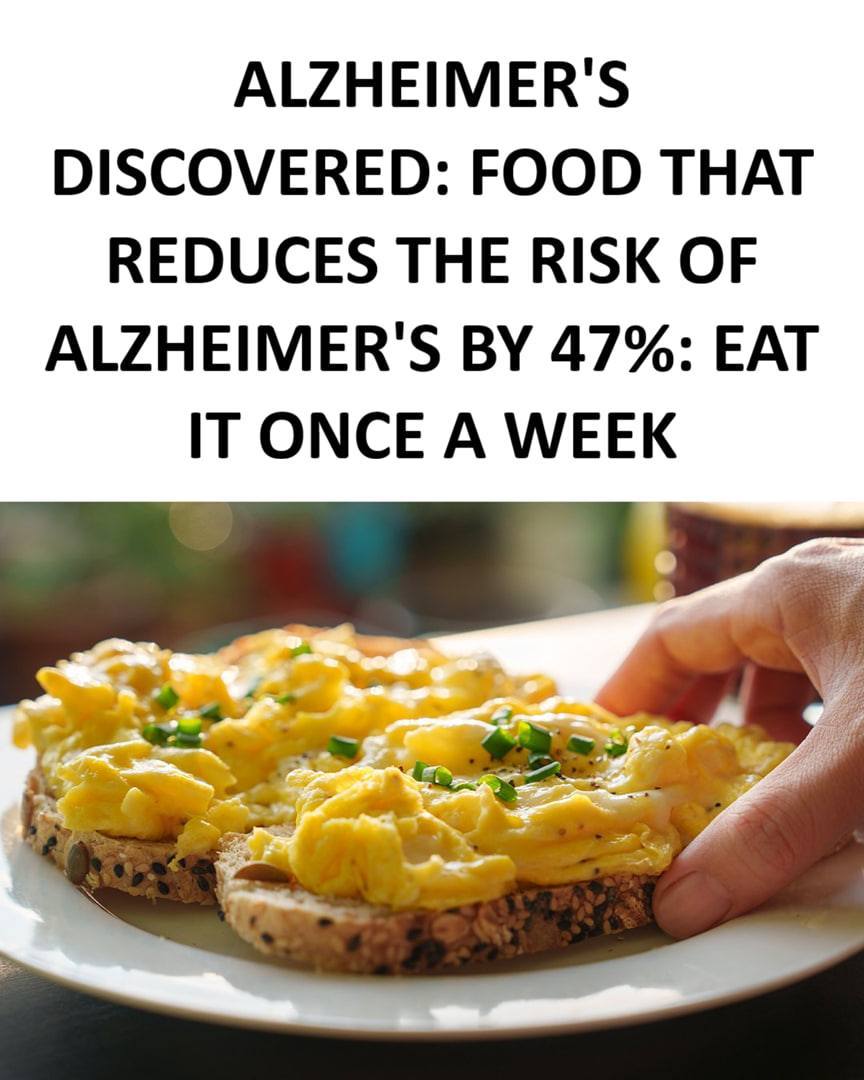
In the relentless quest to unlock the mysteries of Alzheimer’s disease—a condition that erodes memory, identity, and independence—the scientific community has traversed a complex landscape of genetic predispositions, pharmaceutical trials, and intricate neuropathology. Yet, emerging from this dense thicket of research is a finding of striking simplicity and profound implication. A landmark, seven-year study from Rush University in Chicago posits that a humble, everyday dietary staple, the egg, may be a potent ally in the fight against cognitive decline. The research suggests that consuming just one egg per week is associated with a staggering 47% reduction in the risk of developing Alzheimer’s disease. This is not a narrative about a miracle cure, but a compelling story of nutritional biochemistry, preventive neurology, and the power of accessible, whole-food interventions. To understand the full weight of this discovery, we must embark on a detailed exploration of the egg’s unique composition, the brain’s intricate vulnerabilities, and the groundbreaking methodology that linked the two.
Part I: The Brain Under Siege – Understanding the Alzheimer’s Pathogenesis
Before appreciating a potential defense, one must understand the nature of the attack. Alzheimer’s disease (AD) is characterized by a cascade of pathological events that culminate in the progressive loss of neurons and synaptic connections, primarily in brain regions critical for memory and cognition, such as the hippocampus and cerebral cortex.
The two classical hallmarks, identified by Dr. Alois Alzheimer himself over a century ago, are:
Beta-Amyloid Plaques: These are dense, insoluble aggregates of beta-amyloid peptides that accumulate in the spaces between neurons. Beta-amyloid is a fragment of a larger protein (APP) that, in its soluble form, may have normal functions. However, through complex metabolic pathways, it can be cleaved into forms that are prone to clumping. These plaques are thought to disrupt cell-to-cell communication, trigger inflammatory responses, and may directly injure synapses.
Neurofibrillary Tangles: Inside neurons, a crucial structural protein called tau normally helps stabilize microtubules, the cellular “railroad tracks” that transport nutrients and other essential molecules. In AD, tau becomes hyperphosphorylated—covered with an excessive number of phosphate molecules—causing it to detach from microtubules and clump into insoluble filaments. These tangles choke the neuron from within, collapsing its transport system and leading to cellular death.
For decades, the “amyloid cascade hypothesis” dominated, suggesting amyloid plaques were the primary trigger. However, the repeated failure of drugs designed solely to clear amyloid has led to a more nuanced view. Modern neuroscience now sees AD as a multifactorial syndrome involving:
Chronic Neuroinflammation: Activated immune cells in the brain (microglia and astrocytes) release inflammatory cytokines that, while initially protective, can become destructive if chronically engaged.
Oxidative Stress: The brain’s high metabolic rate generates reactive oxygen species (ROS). An imbalance between ROS production and the brain’s antioxidant defenses leads to oxidative damage to lipids, proteins, and DNA.
Vascular Dysfunction: Compromised blood flow, small vessel disease, and a breakdown of the blood-brain barrier (BBB) can deprive the brain of oxygen and nutrients while allowing harmful substances to enter.
Synaptic Dysfunction and Neuronal Energy Crisis: Ultimately, the failure of communication points between neurons (synapses) and a deficit in cellular energy (often linked to mitochondrial dysfunction) are the direct causes of cognitive symptoms.
It is against this multifaceted backdrop that the Rush University study must be viewed. The promise of a dietary intervention lies not in targeting a single pathological “bullet,” but in potentially reinforcing the brain’s overall resilience across several of these vulnerable fronts.
Part II: Deconstructing the Egg – A Micro-Nutritional Powerhouse for the Brain
The egg, often maligned for its cholesterol content in past decades, has been rehabilitated by modern nutritional science as one of nature’s most complete foods. Its neuroprotective potential stems from a sophisticated synergy of bioactive compounds concentrated primarily, but not exclusively, in the yolk.
1. Choline: The Cornerstone Neurotransmitter Precursor
The Rush study highlighted choline as a primary mediator of the observed benefit. Choline is an essential nutrient—vital for life, but the body cannot produce enough on its own. It serves as the backbone molecule for several critical brain compounds:
Acetylcholine Synthesis: Choline is the direct precursor to acetylcholine, a neurotransmitter fundamental to learning, memory, attention, and muscle control. The “cholinergic hypothesis” of AD posits that a profound deficit in acetylcholine-producing neurons is a core feature of the disease. By providing abundant dietary choline, we ensure the brain has the raw material to synthesize this crucial chemical messenger, potentially supporting cognitive circuits under threat.
Phosphatidylcholine and Cell Membrane Integrity: Choline is a key component of phosphatidylcholine, a major phospholipid in all cell membranes. In neurons, healthy, fluid membranes are essential for proper signal transmission, receptor function, and the release of neurotransmitters. Adequate choline supports the structural integrity and repair of neuronal membranes.
Methylation and Epigenetic Regulation: Choline is a major source of methyl groups via its metabolite, betaine. Methylation is a ubiquitous biochemical process involved in DNA repair, gene expression (turning genes on/off), and the synthesis of other important molecules. Proper epigenetic regulation in the brain is increasingly recognized as vital for cognitive function and resilience against age-related degeneration.
2. Lutein and Zeaxanthin: The Carotenoid Shields
The yolk’s vibrant yellow-orange color comes from these two carotenoids. While famed for protecting the eyes, they are also selectively concentrated in the human brain, particularly in regions involved in cognition.
Antioxidant and Anti-inflammatory Action: As potent antioxidants, they neutralize free radicals in the lipid-rich environment of the brain, protecting neurons from oxidative damage. They also demonstrably reduce markers of neuroinflammation.
Enhancing Neural Efficiency: Research using fMRI scans has shown that higher levels of lutein in the brain are associated with more efficient neural processing—akin to a younger brain needing less “energy” or activation to complete a cognitive task.
3. Bioactive Phospholipids and Sphingolipids
Beyond phosphatidylcholine, egg yolk contains other complex lipids like sphingomyelin. These are not just structural elements; they are precursors to signaling molecules (ceramides, sphingosine-1-phosphate) that regulate cell growth, differentiation, and apoptosis (programmed cell death). A balanced intake may support neuronal survival and communication pathways.
4. High-Quality Protein and Essential Amino Acids
Eggs provide all nine essential amino acids in perfect ratios. Amino acids like tryptophan (a precursor for serotonin, regulating mood and sleep) and tyrosine (a precursor for dopamine and norepinephrine, regulating focus and motivation) are direct substrates for neurotransmitter production.
5. Omega-3 Fatty Acids (in Enriched Eggs)
see continuation on the next page
ADVERTISEMENT

