
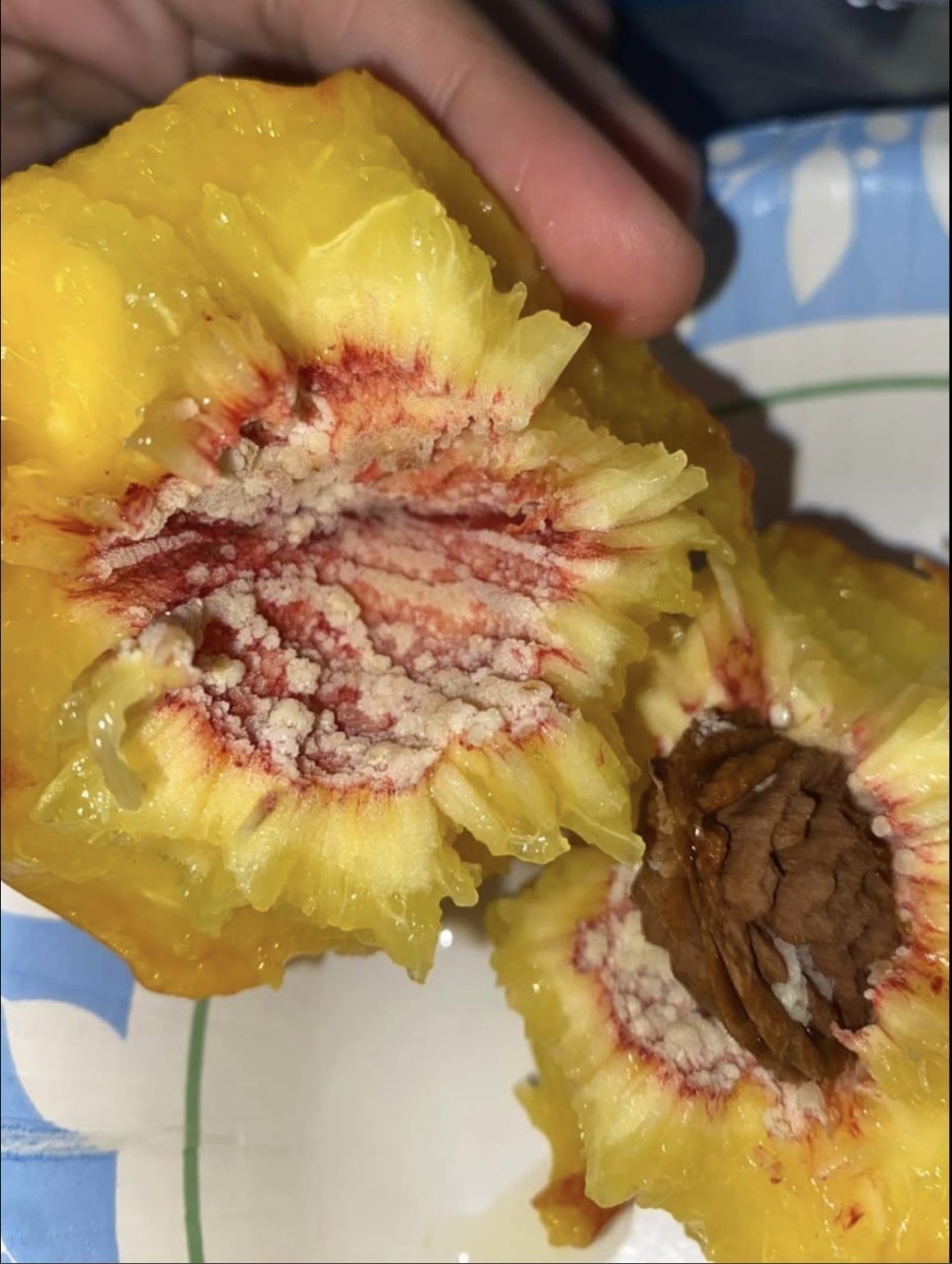
You’ve just enjoyed a sweet, juicy peach, only to find a strange white, fuzzy substance clinging to the pit. Your first thought might be panic, but don’t worry—in most cases, it’s completely harmless. Let’s demystify what you’re seeing.
What Is the White Stuff? (Usually, It’s Not Mold)
The substance is most likely Cottony Leak, a condition caused by a naturally occurring, non-pathogenic (harmless) yeast called Pichia membranifaciens.
Think of it like wild yeast used for baking—it’s a natural part of the fruit’s environment and not the same as dangerous mold that causes spoilage.
Key Identifiers of Harmless Cottony Leak:
-
Appearance: White, cotton-like, or slightly web-like.
-
Location: Only in the crevices of the pit, not on the edible fruit flesh.
-
Smell: The peach itself still smells sweet and fresh, perhaps with a very mild, fermented note from the yeast.
-
Fruit Condition: The surrounding peach flesh is still firm, juicy, and shows no signs of spoilage.
If the white substance is only on the pit and the fruit looks and smells fine, the peach was safe to eat.
When Should You Be Concerned? (Red Flags)
While cottony leak is harmless, you should discard the peach if you see any of these warning signs, which indicate true spoilage or mold:
-
Fuzz on the Flesh: White or grey fuzzy growth on the soft fruit itself.
-
Mushy or Discolored Fruit: The flesh is soft, brown, slimy, or leaking dark juice.
-
Offensive Odor: The peach smells sour, alcoholic, or outright rotten.
-
Pit Damage: The pit is cracked and leaking dark fluid, which can signal internal rot.
 The Bottom Line: If the problem is confined to the pit, you’re fine. If the edible flesh is affected, throw it out.
continued on next page
ADVERTISEMENT

