
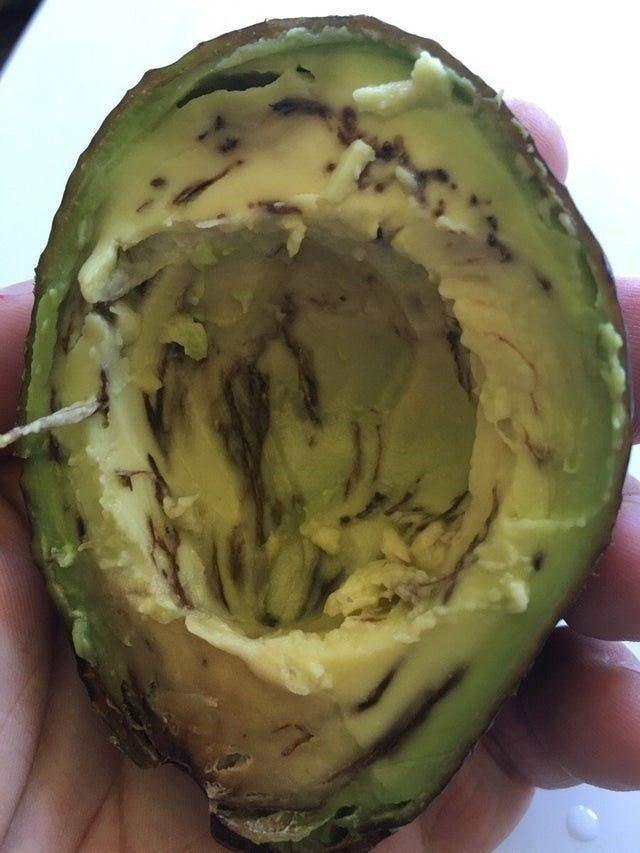
Once it’s open, look closely.
-
Good to eat: Uniform light green flesh.
-
Still okay: Small, isolated brown spots or thin, dark streaks (these can come from bruising or growing conditions—simply slice them away).
-
Toss it: Widespread brown or black patches, especially if the discoloration reaches deep into the flesh, or if the texture is excessively stringy or mushy.
4. Trust Your Nose (and Taste—as a Last Resort)
A fresh avocado smells subtly sweet and nutty.
Throw it out if it has:
-
A sour or fermented odor—this indicates spoilage.
-
A chemical or “off” smell—a sign the oils may have turned rancid.
If it passes the look and smell test but you’re still unsure, a tiny taste will confirm: any sour or bitter flavor means it’s gone bad.
Quick Reference Guide
| Condition | Texture & Appearance | Is it safe to eat? |
|---|---|---|
| Underripe | Firm, no give when squeezed. Skin is bright green (Hass) or green. | Yes—but let it ripen first. |
| Perfectly Ripe | Yields slightly to gentle pressure. Skin is darker (Hass) or still green. Flesh is light green. | Yes—ideal for slicing. |
| Very Ripe | Noticeably soft, may have minor dents. Flesh may have small brown spots. | Yes—best for mashing or blending. |
| Overripe/ Spoiled | Mushy, deep dents, sunken areas. Flesh is mostly brown/black, smells sour, or tastes off. | No—discard. |
ADVERTISEMENT
