
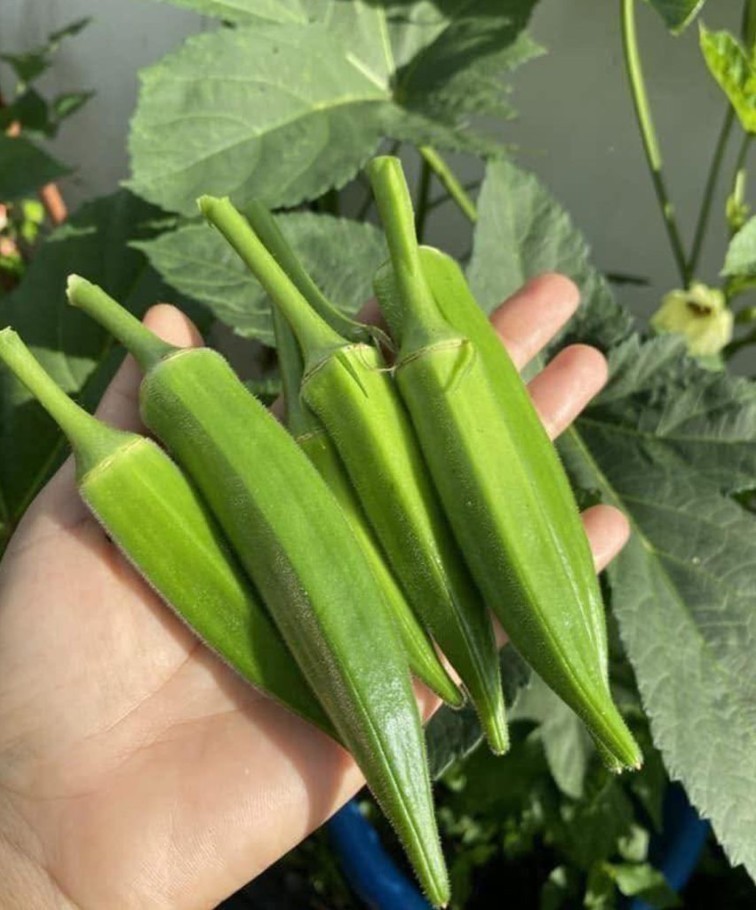
Okra contributes meaningfully to heart health through several mechanisms.
Cholesterol Management:
The soluble fiber in okra binds to bile acids in the intestines and facilitates their excretion. To replenish these bile acids, the liver pulls more cholesterol from the bloodstream, effectively lowering LDL (“bad”) cholesterol levels.
Antioxidant Protection:
Okra is rich in antioxidants including vitamin C, flavonoids (like quercetin), and polyphenols. These compounds neutralize free radicals, reducing oxidative stress that can damage blood vessels and contribute to plaque buildup.
Blood Pressure Support:
Okra provides potassium, a mineral that helps relax blood vessel walls and promotes the excretion of excess sodium, contributing to healthy blood pressure levels.
4. Immune Support and Inflammation Reduction
Chronic, low-grade inflammation is recognized as a root cause of many modern diseases. Okra functions as a natural anti-inflammatory and immune-supportive agent.
Vitamin C Content:
One serving of okra provides a significant portion of the daily recommended vitamin C intake, which supports immune cell function and skin barrier health.
Flavonoid Benefits:
Compounds like quercetin can modulate the inflammatory response, potentially dialing down systemic inflammation. This makes okra valuable for conditions like arthritis or for general recovery from illness.
Gut-Immune Connection:
By promoting a healthy gut microbiome through its prebiotic fibers, okra indirectly supports the substantial portion of the immune system housed in the digestive tract.
5. Bone Health: Supporting Skeletal Integrity
Okra provides two critical micronutrients for bone health.
Vitamin K: The Calcium Director:
Okra is exceptionally high in vitamin K1, which activates osteocalcin—a protein that binds calcium and incorporates it into the bone matrix. Without sufficient vitamin K, calcium cannot be properly utilized for bone mineralization.
Folate’s Supporting Role:
Folate helps lower homocysteine levels, which, when elevated, can interfere with the collagen cross-linking that gives bone its tensile strength.
Part II: The Historical and Cultural Journey of Okra
To understand okra fully, one must appreciate its rich history.
African Roots:
Okra originated in the Abyssinian region encompassing modern-day Ethiopia, Eritrea, and eastern Sudan. It was cultivated and cherished across Africa for millennia, with its name deriving from various West African languages.
The Transatlantic Passage:
The transatlantic slave trade brought okra to the Americas. Enslaved Africans carried the seeds with them as a precious piece of home and a vital source of nutrition. In the brutal conditions of plantations, okra became a cornerstone of sustenance.
The Birth of Gumbo:
The name “gumbo” derives from the West African word for okra, ki ngombo. Enslaved Africans used okra as the essential thickener for this hearty stew, combining it with available ingredients like shellfish, rice, and later, French-inspired roux and sausage.
Eastern Wanderings:
Okra traveled east along trade routes to India and beyond. In Indian cuisine, where it is known as bhindi, cooks mastered techniques to minimize mucilage through dry sautéing and spiced preparations.
A Global Citizen Today:
Okra features prominently in the cuisines of the Caribbean, Brazil, the Middle East, the Mediterranean, the American South, and Southeast Asia—each culture developing its own relationship with the vegetable’s texture.
Part III: Mastering the Art of Cooking Okra
The single greatest barrier to okra appreciation is textural aversion. However, with technique, this can be managed and even celebrated.
Understanding the Science:
The mucilage is contained within the pod’s cells. Cutting releases it, and heat and moisture accelerate its extraction. Cooking methods are about controlling these variables.
Techniques for Minimal Mucilage (Dry Methods)
Technique How to Do It
Cook Whole Trim the stem cap without piercing the pod interior. Roast, grill, or pan-sear whole pods with oil and seasoning. The intact skin seals in the mucilage.
High-Heat Searing Cut okra and toss immediately into a very hot, well-oiled pan. Stir-fry quickly to sear the cut surfaces before significant mucilage can seep out.
Add Acid Early Adding tomatoes, vinegar, or lemon juice early in cooking can help reduce the slippery sensation by breaking the mucilage into less noticeable particles.
Dry Thoroughly After washing, ensure okra is completely dry before cutting. Tossing cut okra with salt, letting it sit, then patting dry before frying draws out surface moisture.
Techniques for Embracing Mucilage (Wet Methods)
Technique How to Do It
Stew Thickener Add sliced okra to broths, gumbos, or curries and simmer. The released mucilage will naturally thicken the sauce to a luscious consistency.
Pickling Pickling in a vinegar brine transforms okra into a crunchy, tangy snack while neutralizing the mucilage.
Global Inspirations
Indian Bhindi Masala: Okra is fried until crisp, then tossed with onions, cumin, turmeric, and chili powder
Southern Fried Okra: Sliced okra is breaded in cornmeal and buttermilk, then deep-fried
Middle Eastern Bamya: Okra stewed slowly with lamb, tomatoes, and onions in a tangy sauce
West African Stews: Okra provides body to dishes with fish, peanuts, and leafy greens
Japanese Tempura: Whole small okra pods make delicate, crisp tempura
Part IV: Essential Cautions for Specific Populations
With potent bioactive compounds come specific interactions. For the following groups, consuming okra requires informed strategy and professional consultation.
Individuals Prone to Kidney Stones (Calcium Oxalate Stones)
The Risk: Okra contains moderate to high levels of oxalates, which can bind with calcium in the kidneys to form crystals and potentially stones in susceptible individuals.
The Strategy:
Discuss intake with a urologist or dietitian
Practice moderation, not necessarily elimination
Pair with calcium-rich foods to promote binding in the gut rather than the kidneys
Stay exceptionally well-hydrated
Boiling okra can leach some oxalates into the water, which can then be discarded
Individuals with IBS or FODMAP Sensitivities
The Risk: Okra contains fructans, a type of fermentable oligosaccharide categorized as a high-FODMAP food. In individuals with IBS, these can lead to gas, bloating, cramping, and altered bowel habits.
The Strategy:
During the strict elimination phase of a low-FODMAP diet, okra is typically excluded
During reintroduction, test a small quantity (2-3 pods) to assess personal tolerance
Some may tolerate smaller amounts, especially if well-cooked
Patients on Anticoagulant Therapy (e.g., Warfarin/Coumadin)
The Risk: Okra is very high in vitamin K, which is essential for blood clotting. Warfarin works by antagonizing vitamin K. A sudden, large increase in vitamin K intake can counteract the medication’s effect.
The Strategy:
The goal is consistency, not avoidance
Inform your doctor if you wish to regularly incorporate okra into your diet
Maintain consistent intake patterns to allow for stable medication dosing
Patients on Diabetes Medication
The Risk: Given okra’s blood-sugar-lowering potential, there is a theoretical risk of additive effects when combined with insulin or oral hypoglycemic agents, potentially leading to hypoglycemia.
The Strategy:
Favor whole food over concentrated extracts or juices
Monitor blood glucose more frequently when adding okra to the diet
Discuss dietary changes with an endocrinologist or diabetes educator
Okra is a tool for better control, not a replacement for prescribed therapy
Individuals with Latex-Food Syndrome
The Risk: Some individuals with a true latex allergy may experience cross-reactivity to certain plant foods, including okra, due to similar protein structures.
The Strategy:
If you have a diagnosed latex allergy, use caution when trying okra for the first time
Start with a tiny amount
Discontinue immediately if you experience oral itching, hives, swelling, or gastrointestinal distress
Conclusion: Okra as a Paradigm of Nuanced Nutrition
Okra stands as a powerful testament to the principle that in nutrition, context is everything. It is not a magical cure-all, but a deeply nutritious, historically rich, and culinarily versatile vegetable whose value is maximized when understood in full.
Its gel-forming fibers, antioxidant bounty, and unique micronutrient profile offer tangible benefits for digestive, metabolic, cardiovascular, immune, and skeletal health. Yet, its oxalate, fructan, and vitamin K content demand respectful consideration from specific segments of the population.
The journey with okra is one of exploration—of its storied past, its global culinary expressions, and its personal impact on your body. It invites us to move beyond food fads and fear, towards a more intelligent, personalized, and appreciative relationship with what we eat.
The final, non-negotiable step is to partner this knowledge with professional healthcare guidance, ensuring that the powerful ingredients on your plate harmonize with your unique physiological symphony. In this balanced, informed approach, the humble okra truly earns its place as a nutritional powerhouse.
ADVERTISEMENT
