
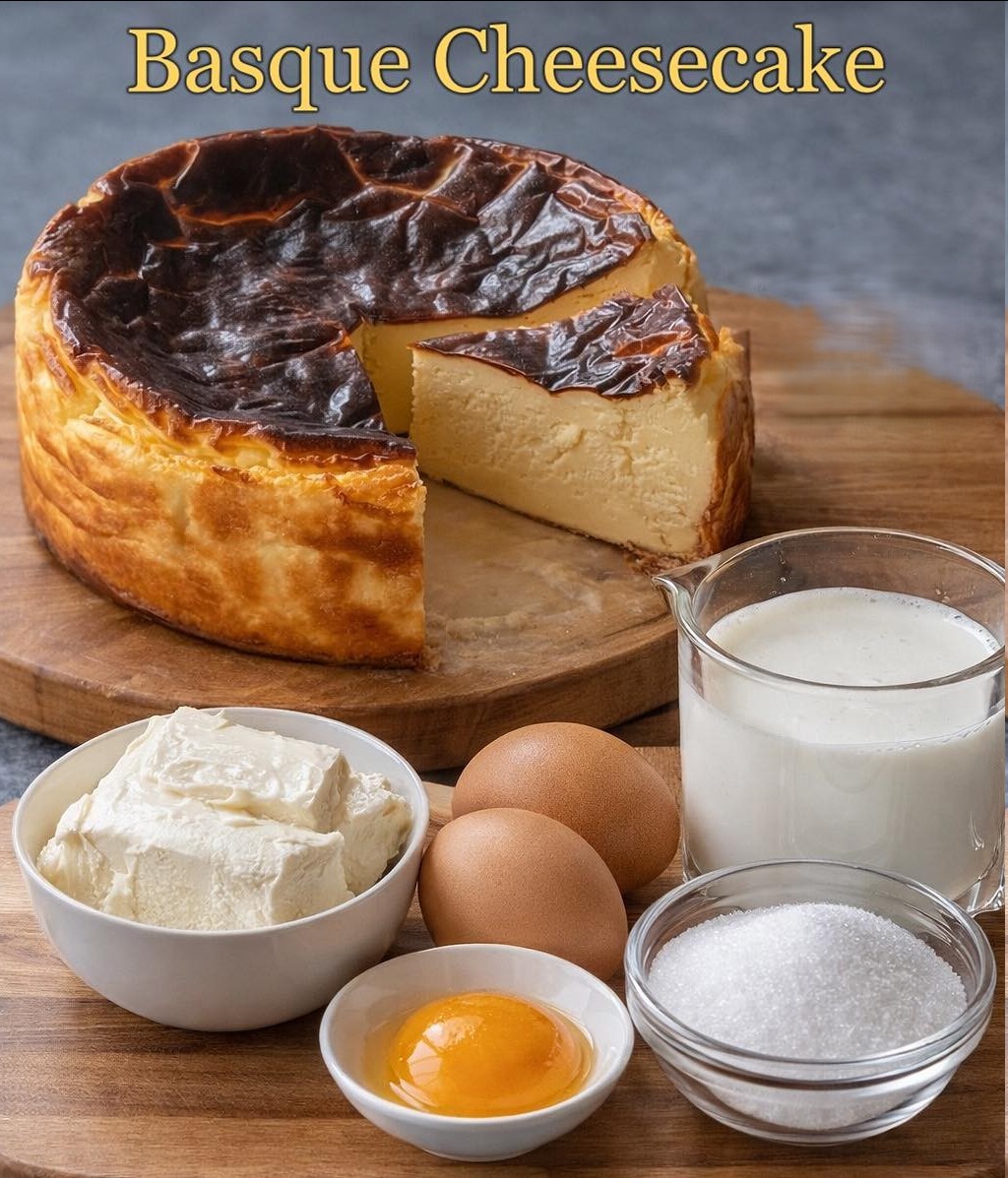
Instructions
1. Prepare Your Pan and Oven:
Preheat your oven to 350°F (175°C) . This initial temperature is key to preventing cracks.
Line a 6-inch round cake pan (at least 2 inches deep) with a large sheet of parchment paper. Crumple the paper first to make it pliable, then press it into the pan, allowing the excess to extend well above the rim. This will give the cheesecake its characteristic rustic look and make it easy to remove.
2. Create a Smooth Cheese Base:
In a large bowl, combine the softened cream cheese and sugar. Place the bowl over a pot of gently simmering water (a double boiler), ensuring the bottom of the bowl doesn’t touch the water. Stir continuously until the mixture is completely smooth, warm to the touch, and the sugar has dissolved. Remove from heat. This gentle melting eliminates lumps without whipping in air, which can cause cracking.
3. Incorporate the Eggs:
Add the egg yolk first and mix until fully incorporated. Then, add the whole eggs one at a time, mixing thoroughly after each addition until the batter is homogenous and glossy. Scrape down the sides of the bowl as needed.
4. Prepare the Cream Slurry:
In a separate small bowl, sift the cornstarch over the heavy cream. Whisk vigorously until the cornstarch is completely dissolved and no lumps remain. This “slurry” method ensures a silky texture without any starchy taste.
5. Combine and Mix:
Pour the cream mixture into the cheese and egg batter. Whisk gently but thoroughly until the batter is completely smooth and uniform. Do not over-whisk; just mix until combined.
6. Bake with a Temperature Change:
Pour the batter into your prepared parchment-lined pan.
-
First Stage: Place the pan in the preheated 350°F (175°C) oven. Bake for 30 minutes. The edges will be set and golden brown, but the center should still have a significant jiggle (like Jell-O).
-
Second Stage: This jiggle is normal. To achieve the iconic dark, caramelized top without overcooking the center, increase the oven temperature to 400°F (200°C) and bake for another 5-10 minutes. Watch it closely; you want a deep amber to almost burnt top.
7. The Key to a Creamy Texture:
Remove the cheesecake from the oven. It will be puffed up and very jiggly. Crucially, let it cool completely in the pan at room temperature. This slow, gradual cooling prevents the sudden temperature change that can cause a “steamed-egg” texture or a sunken, concave center.
8. Chill and Serve:
Once the cheesecake has reached room temperature, transfer it to the refrigerator (still in its pan) and chill for at least 4 hours, but preferably overnight. This step is non-negotiable for achieving the perfect dense, creamy, and sliceable texture. To serve, simply lift it out using the parchment paper. Slice with a long, thin knife, wiping it clean between cuts for neat slices.
ADVERTISEMENT
