
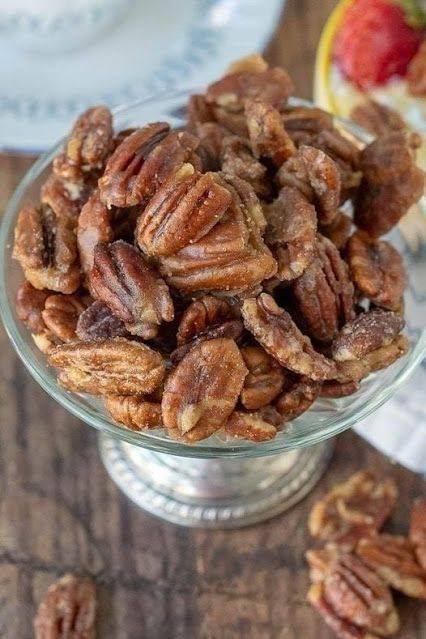
Candied Pecans
4. Alternative Cooking Methods
-
The Stovetop Quick-Fix: For a faster version, combine your sugar, spices, and a bit of water in a skillet over medium heat until the sugar melts into a syrup. Add the pecans and stir constantly until the syrup dries and crystalizes on the nuts.
-
The Slow-Cooker Method: Toss the coated pecans into a slow cooker on low for about 2–3 hours, stirring occasionally. This method is great for large batches and fills your entire house with a wonderful cinnamon aroma.
5. Serving and Presentation
To achieve a high-end look, serve your pecans in a crystal pedestal glass or a decorative silver bowl. The height of a pedestal dish draws the eye and highlights the varying brown tones and textures of the candied nuts. They also make beautiful gifts when packaged in clear glass jars with a rustic twine ribbon.
6. Nutritional Benefits of Ingredients
-
Healthy Fats: Pecans are rich in monounsaturated fats, which are heart-healthy and can help lower LDL (bad) cholesterol.
-
Antioxidants: Pecans contain more antioxidants than any other nut, helping to combat oxidative stress in the body.
-
Essential Minerals: They are a good source of manganese, copper, and magnesium, which are vital for bone health and metabolism.
7. Culinary Essay: The Science of Caramelization
The magic of candied pecans lies in the Maillard reaction and the subsequent caramelization of the sugar coating. As the oven heat interacts with the sugars and the proteins in the pecans, it creates a complex network of new flavor compounds that are far more intense than the original ingredients. The slow-baking process is crucial; it draws moisture out of the nuts while allowing the sugar to transition from a liquid syrup to a brittle, glassy solid. This transformation is what provides the addictive contrast between the tender, buttery interior of the pecan and its rigid, sweet exterior.
ADVERTISEMENT
