
Many people struggle with staying consistently hydrated throughout the day. Busy schedules, forgetting to sip regularly, or simply not feeling thirsty lead to mild dehydration that can leave you feeling sluggish, foggy-headed, or even uncomfortable. Over time, this subtle lack of fluids affects energy levels, focus, and overall sense of well-being. The good news is that small, intentional habits around when you drink water can make a noticeable difference in how you feel without overhauling your routine.
But here’s the intriguing part: timing your water intake at specific moments may support your body’s natural processes in unique ways. Stick around to discover a simple daily rhythm backed by hydration insights that could quietly boost how energized and comfortable you feel from morning to night.

Why Timing Matters for Hydration
Hydration isn’t just about drinking enough water overall—it’s about supporting your body when it needs it most. Research shows that consistent fluid intake helps maintain blood volume, supports nutrient transport, and aids temperature regulation. While total daily water needs vary (generally around 2-3 liters from all sources for adults, per guidelines like those from the Mayo Clinic), spreading it out thoughtfully can enhance comfort and function.
Studies, including reviews from sources like the National Institutes of Health, link good hydration to better mood, cognitive performance, and even reduced risks for certain issues like kidney stones or headaches. Let’s explore practical times to prioritize your water glass.

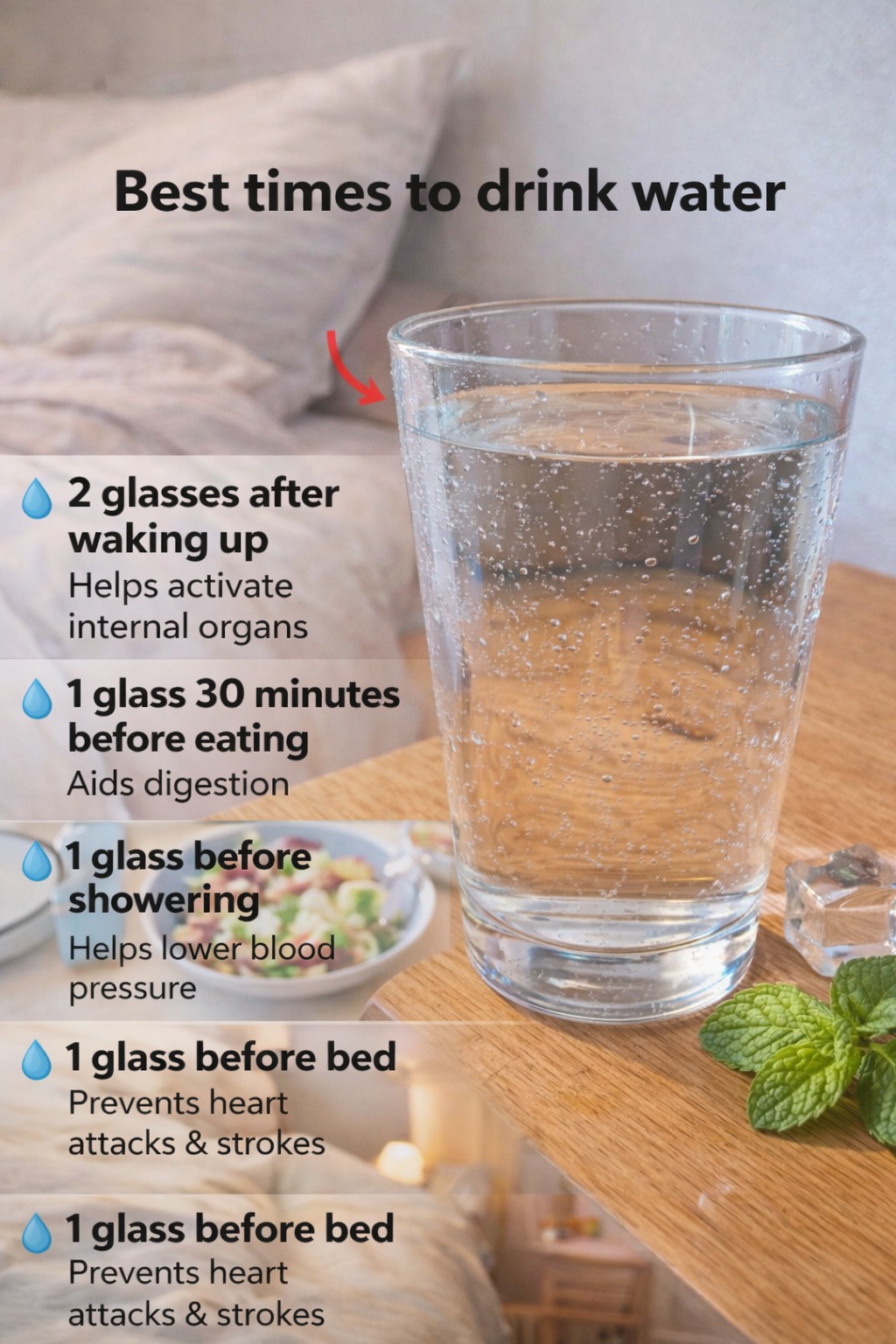
1. First Thing in the Morning: Replenish After Overnight Rest
After 6-8 hours of sleep without any fluids, your body wakes up slightly dehydrated. Drinking 1-2 glasses (about 400-500 ml) of water right away helps restore balance quickly.
This simple step supports alertness and may ease morning grogginess. Some evidence suggests it can improve mood and cognitive tasks like memory shortly after. Adding a slice of lemon makes it refreshing without calories.
Actionable Tip: Keep a glass by your bedside. Upon waking, sit up slowly and drink before anything else. Start with room-temperature water if cold feels too shocking.
But that’s not the only morning boost—keep reading for how this ties into your meals.
2. Before Meals: Support Digestion and Fullness
Drinking a glass of water about 30 minutes before eating prepares your system nicely. It can help you feel fuller sooner, potentially leading to more mindful portions.
Small studies, such as those reviewed in nutrition journals, indicate that pre-meal water (around 500 ml) may reduce calorie intake modestly in some people, supporting weight management efforts when combined with balanced eating. Water also aids saliva production and helps break down food for smoother digestion.
Here’s a quick comparison of pre-meal hydration approaches:
- No pre-meal water — You might eat faster or more without noticing fullness cues.
- 1 glass 30 minutes before — Promotes satiety signals and better portion awareness.
- Sipping during the meal — Supports swallowing and nutrient breakdown without overwhelming the stomach.
Actionable Tip: Set a reminder on your phone. Sip slowly to avoid bloating—aim for plain water or herbal tea.
This habit alone can feel transformative for daily comfort.
3. Around Physical Activity or Sweating Moments
Anytime you move—whether a workout, walk, or hot day—your body loses fluids through sweat. Drinking before, during, and after helps maintain performance and recovery.
Guidelines from sports science recommend starting hydrated (about 5-7 ml per kg body weight hours before exercise) and sipping as needed. This prevents fatigue, cramps, or overheating.

Bullet List of Quick Hydration Wins During Activity:
- Pre-exercise: 1-2 glasses 2-4 hours ahead.
- During: Small sips every 15-20 minutes if sweating heavily.
- Post: Replenish what you lost (weigh yourself before/after for a rough guide).
Stay ahead of thirst—it’s often a late signal.
4. Before Bed: Gentle Overnight Support
A small glass of water (not too much to avoid nighttime trips) before sleep helps maintain hydration through the night. Consistent daily intake, including evening fluids, supports overall cardiovascular comfort, as some observational data links better hydration to heart health markers.
Avoid large amounts close to bedtime if it disrupts rest—aim for moderation.
Actionable Tip: Pair it with winding down: dim lights, sip calmly, and place a bottle nearby for morning ease.
Other Smart Moments to Sip Water
- When you feel a headache coming — Mild dehydration is a common trigger.
- Mid-afternoon slump — A quick glass can refresh focus.
- With medications — Many require water to swallow properly.
Putting It All Together: Your Simple Daily Water Rhythm
Start your day with 1-2 glasses upon waking to rehydrate. Add one before each main meal to aid digestion and satisfaction. Sip throughout activity or hot moments. Finish with a modest amount before bed for balance.
These aren’t rigid rules—just gentle prompts to drink more intentionally. Track how you feel after a week; many notice steadier energy and better comfort.
FAQ
How much water should I drink daily? It varies, but most adults aim for 2-3 liters total from fluids and food. Listen to thirst and adjust for activity, climate, or health needs.
Is it bad to drink water right before bed? Not necessarily— a small amount supports hydration, but too much may interrupt sleep with bathroom visits. Find what works for your routine.
Does the temperature of water matter? Room temperature is gentle on the stomach, while cold can feel refreshing. No strong evidence shows one is vastly superior for most people.
Disclaimer: This article is for informational purposes only and not medical advice. Hydration needs differ by individual—consult a healthcare professional for personalized guidance, especially if you have conditions affecting fluid balance.
ADVERTISEMENT
